
White Kitchen Appliances: The Design Mistake That Ruins Your Entire Renovation
Here's why matching white appliances to white cabinets backfires every time.
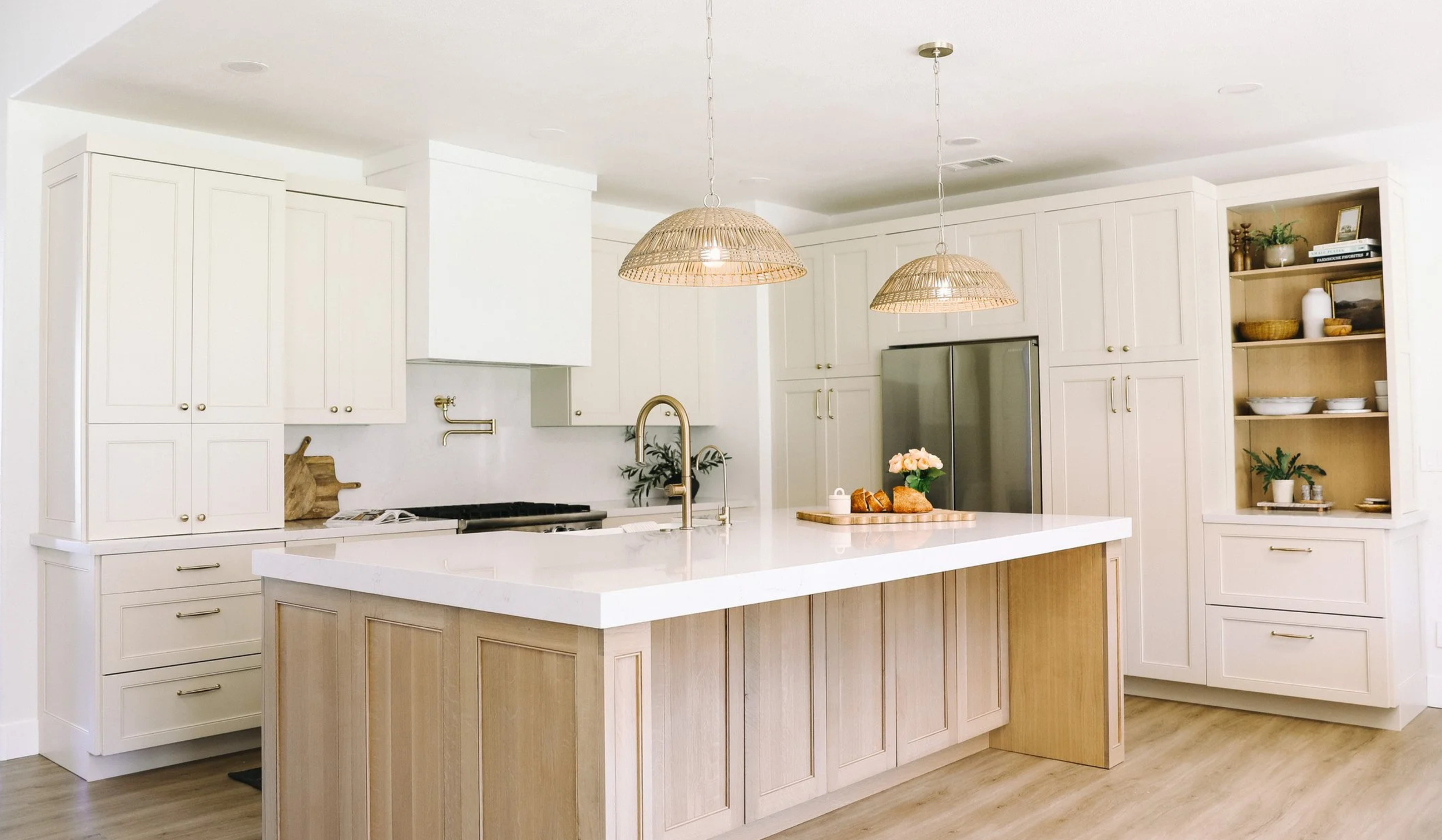
Not all whites are created equal. I know, I know… it sounds ridiculous. They're both white, right? But cabinet white and appliance white have totally different undertones, and your brain absolutely knows it, even if you can't explain why.
Cabinet finishes come in cool white, warm white, or neutral white depending on what you chose. Appliance manufacturers almost always go with a warmer, creamier white. When you put them next to each other, the difference is jarring and obvious.
Your white appliances end up looking cream-colored or beige. Or yellow. Or dingy. Even though they're brand new. Not ideal, right?
What looked perfectly fine in the showroom (with showroom lighting, in a showroom that's designed to make everything look good) looks completely different in your actual kitchen with your actual lighting. Your Saturday afternoon showroom visit doesn't match your Tuesday morning kitchen reality.
Your brain clocks that something's off every single time you walk in. And that feeling doesn't fade. You just get used to being bothered by it.
How Designers Actually Think About This
Here's what separates a polished renovation from a DIY situation: designers think about white kitchen appliances and how they'll work with your cabinets before anything gets ordered.
They're not just picking what looks cute. They're mapping out how finishes interact, where contrast happens, and whether everything works together visually from the start.
They ask the right questions upfront. What's your cabinet color? What undertone does it have? What's your kitchen lighting like? Then they choose appliances with actual intention (thinking about contrast instead of failed matching).
When you skip this step, you end up with beautiful white cabinets, beautiful white appliances, and a kitchen that feels like a mistake instead of a design.
What to Choose Instead: 4 Better Appliances for White Kitchen
Here's the principle that matters: intentional contrast always beats failed matching.
Don't try to blend. Choose something that clearly stands on its own.
Option 1: Stainless Steel (The Safe Choice)
Why it works:
Stainless creates obvious contrast with white cabinets. You're not pretending to match. It's a completely different material. The reflective surface adds visual interest without being aggressive. And it's everywhere, which means you have options and can replace it easily down the line.
When to pick it:
You want something classic that works with most styles. Your kitchen leans transitional or traditional. You value flexibility.
The catch:
Shows fingerprints (get fingerprint-resistant if possible). Can feel a bit commercial. And it's everywhere, so it's not exactly unique.
But it works. Always has, always will.
Option 2: Panel-Ready (The Seamless Choice)
What this actually means:
Panel-ready appliances let you put custom cabinet panels on the front. Your fridge, dishwasher, even your range get covered with your actual cabinet doors. The appliances genuinely disappear.
Why it works:
Panel-ready matches your specific cabinet white, not some generic manufacturer white. It creates that high-end, European kitchen look. It's intentional and custom feeling.
When to pick it:
You want a truly integrated kitchen. Your budget allows (this costs more). You're going for modern or transitional and want that seamless vibe.
The catch:
More expensive. Not all brands offer it. And it's a commitment. If you want to change your kitchen aesthetic later, you're stuck.
Option 3: Black Appliances (The Bold Choice)
Why it works:
Black creates drama and intention. No one thinks you tried to match and failed. It's clearly a deliberate choice. Modern, sophisticated, statement-making.
When to pick it:
Your style is modern or contemporary. You want a kitchen with personality. You're using black elsewhere (hardware, lighting, fixtures). It's part of a bigger design plan, not just a random choice.
The catch:
Shows everything. Smudges, fingerprints, dust. Requires actual maintenance to stay polished. And it's a commitment. It's very visible, very intentional.
But if black is your vibe, it looks incredible with white cabinets.
Option 4: Matte Black or Custom Colors (The Designer Choice)
Why it works:
Even more elevated than standard black. Matte finishes hide fingerprints better. Feels custom and high-end. Like you actually hired a designer (even if you're just really intentional).
When to pick it:
Your budget allows for premium. You want truly unique. Your style is bold and modern. You're committed to this aesthetic.
The catch:
Most expensive option. Limited availability. Trendy (might feel dated faster than classic stainless). It's a risk because you're making a big statement.
But when it works, it really works.
📖 RELATED: The same intentional-contrast thinking applies to your entire kitchen. Read Your Cabinets Will Be in Your Kitchen for 20+ Years. Here's How to Make Sure You Still Love Them to learn how to make cabinet choices that age beautifully and work cohesively with appliances, hardware, finishes, and everything else in your space.
How to Actually Decide
Choose stainless if:
You want safe and classic.
You like transitional or traditional style.
You have a mid-range budget.
You want future flexibility.
Choose panel-ready if:
You want seamless integration.
Your aesthetic is modern or European.
You have a higher budget.
You're staying in this kitchen for the long haul.
Choose black if:
You want contrast and drama.
Your style is modern.
You're using black accents elsewhere.
You don't mind cleaning smudges.
Choose matte black or custom if:
Your budget is higher.
You want a truly unique kitchen.
Your style is bold and design-forward.
You're committed to this look.
What If You Already Have White Kitchen Appliances?
Don't spiral. You have options.
Option 1: Live with it.
If it doesn't bother you, it's genuinely fine. Not everyone notices, and not every design imperfection ruins a kitchen. If you actually like your white-on-white situation, that matters. Design is personal.
Option 2: Replace gradually.
You don't have to swap everything at once. Replace the fridge first. Then the range. Then the dishwasher. Shift the aesthetic over time as things need replacing.
Option 3: Style around it.
Make it look intentional on purpose. Add other white elements (white tile, white accents, white hardware) so the whole thing reads as a cohesive choice instead of an accident.
The Bottom Line
I know this might ruffle some feathers. Maybe you have white appliances with white cabinets and you're thinking, "But I like mine!" And if you genuinely do, awesome.
But if you're in the planning phase, thinking white kitchen appliances will make appliances disappear… they won't, friend. They'll just look like you tried to match and couldn't quite nail it.
Go with intentional contrast instead. Stainless, panel-ready, black. Literally anything but white-on-white.
Your future self will thank you. 🙂
FREE RESOURCE: Don't Make Another Design Decision Without This Guide
You figured out the white appliance thing. Smart. But this is honestly just one example of a bigger pattern: making decisions that seem logical in the moment and then looking completely wrong once they're installed.
I’m talking about entire layouts that don’t work. Cabinets that sound great until you're living with them. Materials that clash. It happens because we're usually making these choices in isolation, one at a time, instead of as part of an actual plan.
I created a guide that walks through the 7 mistakes I see most often before anyone even orders appliances. It's free, and it'll save you from a lot of expensive regrets.
✨Grab the FREE guide here→ Before You Renovate: Every Homeowner Should Know the Top 7 Mistakes to Avoid

About Taylor Ferrell: Interior Designer, San Luis Obispo & Beyond
Taylor Ferrell is the designer behind SALT Design Co. She specializes in creating homes that feel intentional and work beautifully in real life. If you want to talk through your specific kitchen and what appliances actually make sense with your cabinet color and lighting, book a 30-minute Zoom with Taylor here.