
Why Garage Cabinets Are Taking Over Kitchen Design (And How Many You Actually Need)
A designer's honest take on the appliance cabinet trend that's gotten out of hand
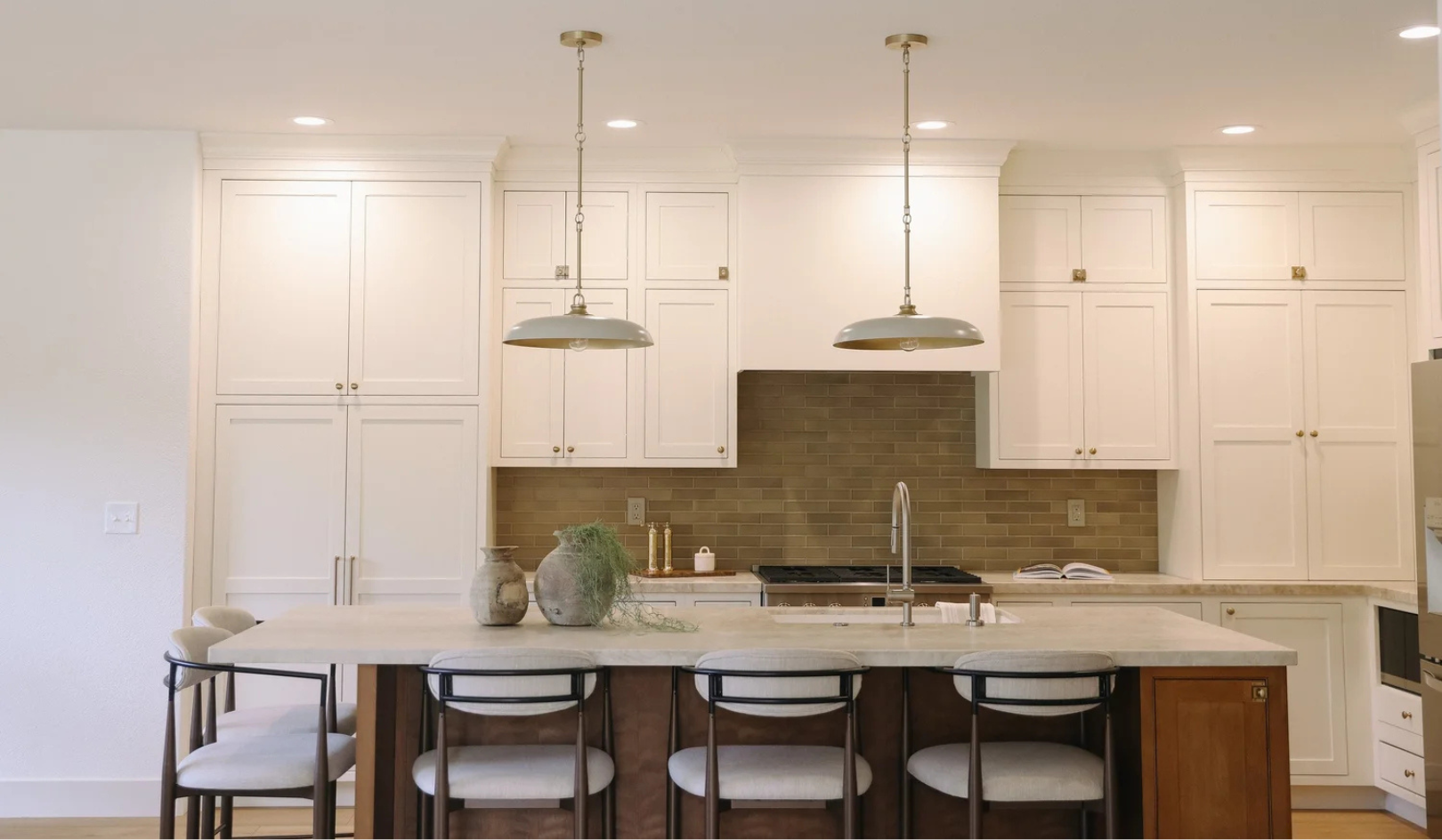
Look at upper cabinets in kitchens right now, and you'll notice something: high, low, high, low, high, low.
That choppy rhythm is coming from one culprit: garage cabinets.
What started as a smart, useful appliance cabinet solution has multiplied into one of the kitchen cabinet design trends spiraling out of control right now. Homeowners are asking for two, three, even four garage cabinets in a single kitchen, and the result is a wall of cabinetry that looks fragmented instead of intentional.
Here's why garage cabinets are having a moment, why more isn't better, and how many you actually need.
What a Garage Cabinet Actually Is
A garage cabinet is exactly what it sounds like: a cabinet, usually tall and positioned at counter height or upper level, designed to hide small appliances (coffee makers, toasters, stand mixers) behind a door or tambour front.
The idea is simple and genuinely useful.
Your coffee maker stays plugged in and accessible, but it's hidden behind closed doors when you're not using it. Your countertop stays clear. You get that Instagram-ready, clutter-free aesthetic without having to unplug everything and store it in a cabinet somewhere else.
Originally, garage cabinets were a smart appliance cabinet solution for one or two frequently used countertop appliances.
Notice: one or two. Not five.
Why Appliance Cabinets Became So Popular
The rise of the "clutter-free counter" aesthetic changed everything.
Minimalist kitchens started trending on Instagram. Influencers showed off pristine countertops with nothing on them. Social media normalized the idea that a "good" kitchen is one where you can't see anything. So homeowners started wanting to hide small appliances without unplugging and storing them elsewhere.
And then the upsell happened.
Design influencers and social media started promoting multiple appliance cabinets as a "must-have" feature. Interior design trends spread fast once they hit social media. Kitchen showrooms and cabinet companies realized they could promote garage cabinets as an upsell. More cabinets meant more money. More posts about appliance cabinets meant more people wanting them.
The result? Everyone started thinking they needed three or four garage cabinets.
The Problem: Garage Cabinet Overuse
This is where it gets messy.
The high-low cabinet rhythm
When you add two, three, or four garage cabinets across a wall of upper cabinets, the heights vary. Some appliance cabinets sit lower or taller than standard uppers. This creates a choppy, uneven visual line instead of a clean, cohesive one.
Your eye bounces from high to low to high, and the kitchen cabinet design feels fragmented instead of intentional.
Diminishing usefulness
One garage cabinet genuinely earns its space. A coffee station, for example. That makes sense.
A second or third appliance cabinet often ends up housing things that didn't need hiding in the first place. More doors and more broken-up cabinetry can actually reduce usable, flexible storage. You're spending cabinet real estate to hide things you rarely use, while losing storage for things you actually need daily.
The trend-chasing trap
Homeowners see garage cabinets everywhere and assume they need as many as possible.
It's easy to get swept up in interior design trends without pausing to ask whether a feature actually fits your kitchen. The original problem (clutter) gets solved, but a new problem (visual chaos) takes its place.
Here's my prediction: We're going to look back one day and say “that was so 2026,” because you won't see upper cabinets anymore, just a tower of appliance cabinets. The over-application of a good idea risks making it feel dated fast.
📖 RELATED: Want to understand which interior design trends actually age well versus ones that date fast? Read 5 Interior Design "Trends" I'm Loving Right Now (That Won't Feel Dated Next Year).
How Many Garage Cabinets Do You Actually Need?
Start by asking yourself one question.
What small appliances do I use daily, and want to keep plugged in?
Usually the answer is one or two. A coffee maker, maybe a toaster.
The one-garage-cabinet rule of thumb
One well-placed garage cabinet near the coffee or breakfast zone handles most homeowners' needs. If you truly need to house more (stand mixer, blender), consider a single larger appliance cabinet rather than multiple smaller ones.
This keeps your kitchen cabinet design clean and intentional.
When a second appliance cabinet might make sense
A second garage cabinet only works if you have a genuinely large kitchen with high appliance counts and dedicated baking or coffee zones that are used daily by multiple people.
When to skip garage cabinets entirely
If your appliances are used infrequently, standard cabinet storage works fine. And if keeping the upper cabinet line clean and consistent matters more to you than hiding appliances, thoughtful kitchen cabinet design should prioritize your daily habits over what's trending.
📖 RELATED: Read Your Cabinets Will Be in Your Kitchen for 20+ Years. Here's How to Make Sure You Still Love Them to learn how to plan your kitchen cabinet design layout around how you actually cook and live, not around every appliance cabinet trend that comes along.
How to Design Kitchen Cabinets Intentionally
If you decide you need a garage cabinet, use it strategically.
Keep the cabinet line as consistent as possible.
Position the garage cabinet at the end of a run, not interrupting the middle. Match the height to surrounding cabinetry where possible, rather than creating a jarring step up or down.
Choose one primary spot.
Concentrate function in one zone rather than scattering appliance cabinets across the kitchen. This is a core principle of good kitchen cabinet design.
Consider alternatives to garage cabinets.
A pantry with an outlet inside can house appliances without breaking up your cabinet line at all. A single deep drawer with a pop-up mixer shelf can replace a garage cabinet for one specific appliance.
Sometimes the best appliance cabinet is no garage cabinet at all.
The Bottom Line: One Garage Cabinet, Not Five
I still use appliance cabinets in my designs, and I think they're incredibly useful.
My rant isn't "never use them." It's "please don't use five of them."
One well-placed garage cabinet solves a real problem. A wall of high-low cabinets trying to hide every single countertop appliance just creates a new problem: a choppy, chaotic kitchen cabinet design.
So ask yourself what you actually need to hide. Keep it to one spot if you can. Let the rest of your upper cabinets stay clean and consistent.
Good kitchen cabinet design isn't about chasing every trend. It's about choosing what actually works for how you live.
FREE RESOURCE: Planning a reno soon?
Appliance cabinet decisions are just one piece of a kitchen that actually works.
Layout decisions. Cabinetry quality. Storage that makes sense for how you live. When these aren't aligned, even the most thoughtfully designed kitchen cabinet setup fails you daily.
This free guide walks through the 7 renovation mistakes that happen before you even pick your backsplash. Learn why being intentional beats following interior design trends, how to make choices that age beautifully, and how to design a kitchen that works as hard as it looks.
⚡ Grab the FREE guide here→ Before You Renovate: Every Homeowner Should Know the Top 7 Mistakes to Avoid

About Taylor Ferrell: Interior Designer San Luis Obispo
Taylor Ferrell is the designer behind SALTDesign Co., specializing in designing spaces that work beautifully for how people actually live. She's passionate about helping homeowners make intentional design choices instead of chasing trends.