
Can You Stain Oak Cabinets to Look Like Walnut? (A Designer Explains Why Not)
The grain pattern problem nobody talks about
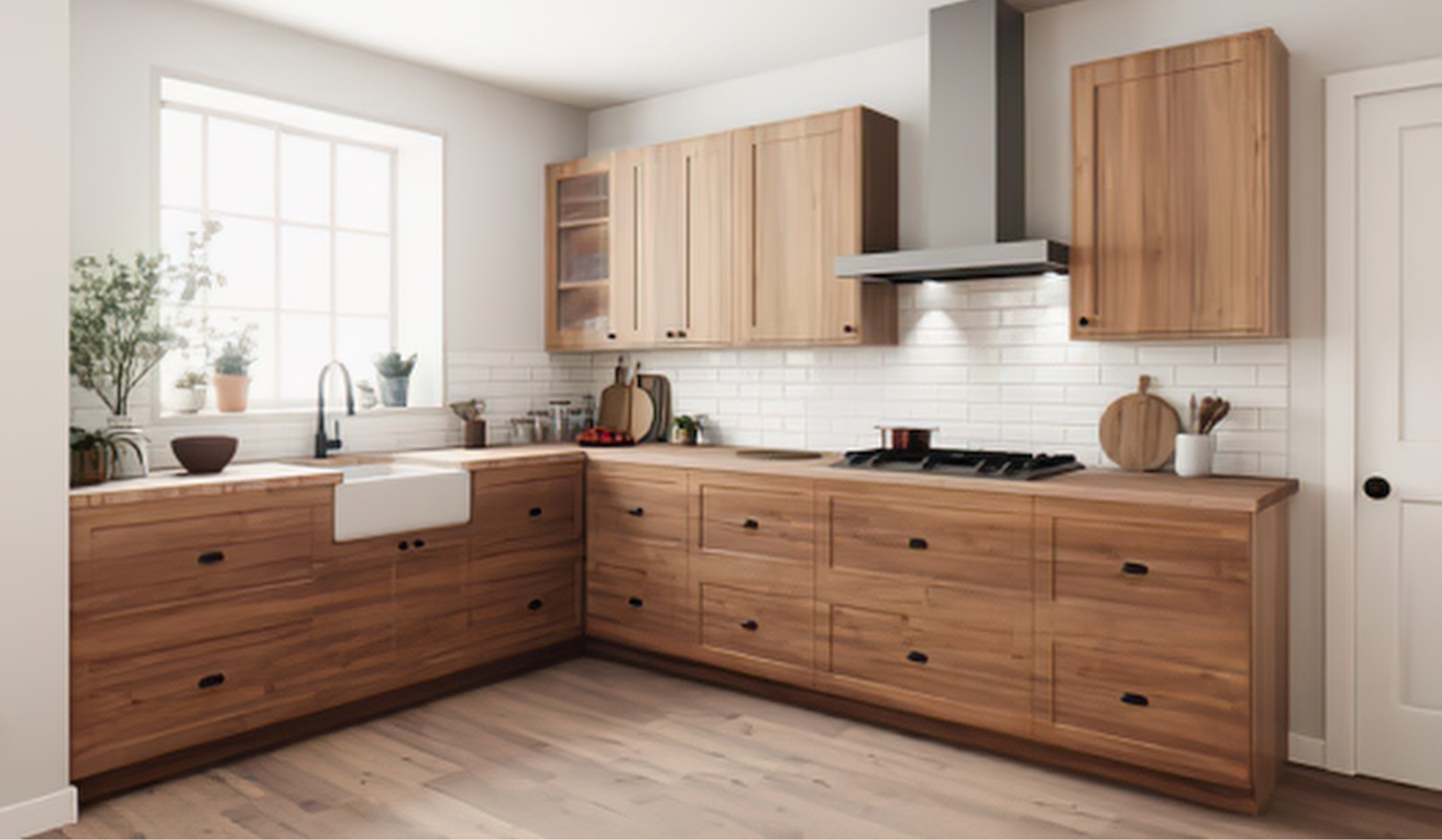
You've seen the trick: stain oak cabinets dark and hope they pass for walnut. 🤞
Here's why it doesn't work: it's not about color. It's about grain.
Walnut cabinets are expensive. They're luxurious. They're hard to source. So when you're trying to do a kitchen renovation on a budget, staining oak to fake the walnut look seems like a smart workaround. But no amount of dark stain can override what's happening at a structural level with the wood itself.
This guide breaks down why oak and walnut are fundamentally different, why staining kitchen cabinets can't fix that difference, and what you should actually do if you love the walnut look… but not the walnut price tag.
Why Grain Pattern Matters More Than Stain Color
Stain just adds color. It doesn't change the wood structure.
Grain pattern is the natural texture created by how the tree grew. It's the lines, swirls, and physical texture on the wood surface. Stain sits on top of all that. Your eye reads the grain pattern before it even registers the color. This is why two cabinets at the exact same stain depth can look completely different. The grain tells the real story.
Oak's Grain Characteristics
Rift-cut white oak has strong, consistent vertical lines running through it.
Very linear. Very structured. Very graphic. This is the grain pattern you see in most oak cabinets, and no matter what color stain you apply, those vertical lines stay put.
Oak also has open grain, which means you can feel the texture when you run your hand across it. This texture is part of what reads as "oak" to your brain, regardless of whether it's stained honey-blonde or dark chocolate brown.
📖 RELATED: Want to understand how oak compares to other cabinet wood choices and how different woods take stain? Read Good Wood for Cabinets: A Simple Breakdown of What to Know Before You Choose.
Walnut Cabinets Tell a Different Story
Walnut grain is softer and more subtle.
Instead of those strong vertical lines, you get organic movement. Swirls. Color variation within the same board. A tighter grain that's smoother to the touch (closed grain, not open).
This is why walnut cabinets read as rich and sophisticated no matter how light or dark they're finished. The grain does the heavy lifting, not the stain color.
The Visual Comparison
Put a rift-cut white oak door next to a medium-tone walnut cabinet door.
Both are beautiful. Both might even be similar in color. But they will never look alike because of that beautiful grain.
And staining kitchen cabinets a darker color doesn't erase that difference. It just gives you darker oak. 🤷🏼
Why People Try to Fake Walnut Cabinets with Oak
The logic makes sense. That's why so many people try it.
Walnut costs 20-40% more than oak.
Walnut is slower-growing and less abundant, which means longer lead times and higher prices. When you're working with a kitchen renovation on a budget, that price difference stings.
Plus, walnut cabinets have serious aesthetic appeal. Rich, chocolate-brown tones. Sophisticated, elevated look. Association with luxury and high-end design. It's the cabinet wood everyone wants.
So the thinking goes: "If I stain oak dark enough, it'll look expensive and luxurious too."
The problem? This assumes color is the only thing that matters. It ignores grain, which is actually the dominant visual cue. It's a common trap for homeowners trying to manage a kitchen renovation budget while still wanting a high-end look.
What Actually Happens When You Try to Stain Oak Cabinets to Look Like Walnut
The result is not what people hope for.
You get dark-stained oak cabinets. Not walnut.
The vertical grain pattern is still clearly visible. It reads as an attempt to mimic something rather than an intentional design choice. And over time, as stains age or fade unevenly, the "oak trying to be walnut" look becomes more obvious, not less.
This matters for resale and longevity too. Trying to fake a material rarely photographs or ages as well as embracing the real thing. Buyers and designers can often tell the difference between authentic walnut and stained oak. It's a detail that can undercut an otherwise beautiful kitchen.
What to Do Instead of Staining Oak Cabinets to Fake Walnut
You have better options, friend.
Option 1: Embrace Oak's Natural Beauty
Choose a stain color that complements oak's linear grain pattern instead of fighting it.
Warm honey tones. Natural finishes. Rift-cut options that minimize grain movement. Let oak be beautifully, intentionally oak. When you stop trying to make it something it's not, it actually looks more intentional and more expensive.
Option 2: Budget for Real Walnut Cabinets in Key Areas
You don't need walnut everywhere.
Use walnut on the island only (smaller footprint, lower cost). Walnut open shelving or floating shelves as an accent. Walnut hardware or trim details for a taste of the material. This is how you get the luxury look without the luxury price tag on your entire kitchen.
Option 3: Choose a Different Affordable Alternative
Knotty alder or cherry both offer warm, rich tones with their own honest grain character.
These aren't trying to be walnut cabinets. They're their own beautiful option. When you embrace what a material actually is instead of trying to force it to be something else, the result reads as intentional.
📖 RELATED: If you want to explore other beautiful cabinet woods, check out White Oak Alternatives: 4 Wood Species That Look Just as Good.
Option 4: Consider Walnut Veneer
Walnut veneer over a substrate can be more affordable than solid walnut cabinets.
It still shows true walnut grain (not oak trying to fake it). It's a smart middle ground between full solid walnut and staining oak, and it works perfectly for a kitchen renovation on a budget where walnut cabinets are the dream but the budget says otherwise.
The Bottom Line: Stop Trying to Stain Oak Cabinets Into Walnut
Oak is always going to look like oak, just in a different color. So instead of fighting what oak naturally is, either lean into its beautiful vertical grain, or find room in your kitchen renovation budget for real walnut cabinets somewhere in your space. Even if it's just the island or open shelving.
Neither wood is better. They're just different stories. And both are worth telling honestly.
Your Next Step: Make Sure Every Material Decision Works for Your Kitchen
Material decisions are just one piece of a kitchen renovation that actually works. Layout. Cabinetry quality. Storage that makes sense. Lighting that shows off your space. When these aren't aligned, even the most beautiful cabinet wood can't save a kitchen that frustrates you daily.
This free guide walks through the 7 renovation mistakes that happen before you even pick materials.
✔️ Why authentic materials always age better than imitations
✔️ How to get the luxury look on a realistic budget
✔️ What actually matters when you're choosing finishes and woods
✨Grab the FREE guide here→ Before You Renovate: Every Homeowner Should Know the Top 7 Mistakes to Avoid

About Taylor Ferrell: Central Coast Kitchen Designer & Beyond
Taylor Ferrell is the designer behind SALT Design Co., specializing in beautiful, lived-in spaces that work seamlessly in real life. She designs homes for people who actually use them, not just look at them. If you're planning a renovation and want to think through your space intentionally, book a 30-minute Zoom with Taylor anytime.