
White Oak Alternatives: 4 Wood Species That Look Just as Good
When you want warmth and character without following the crowd
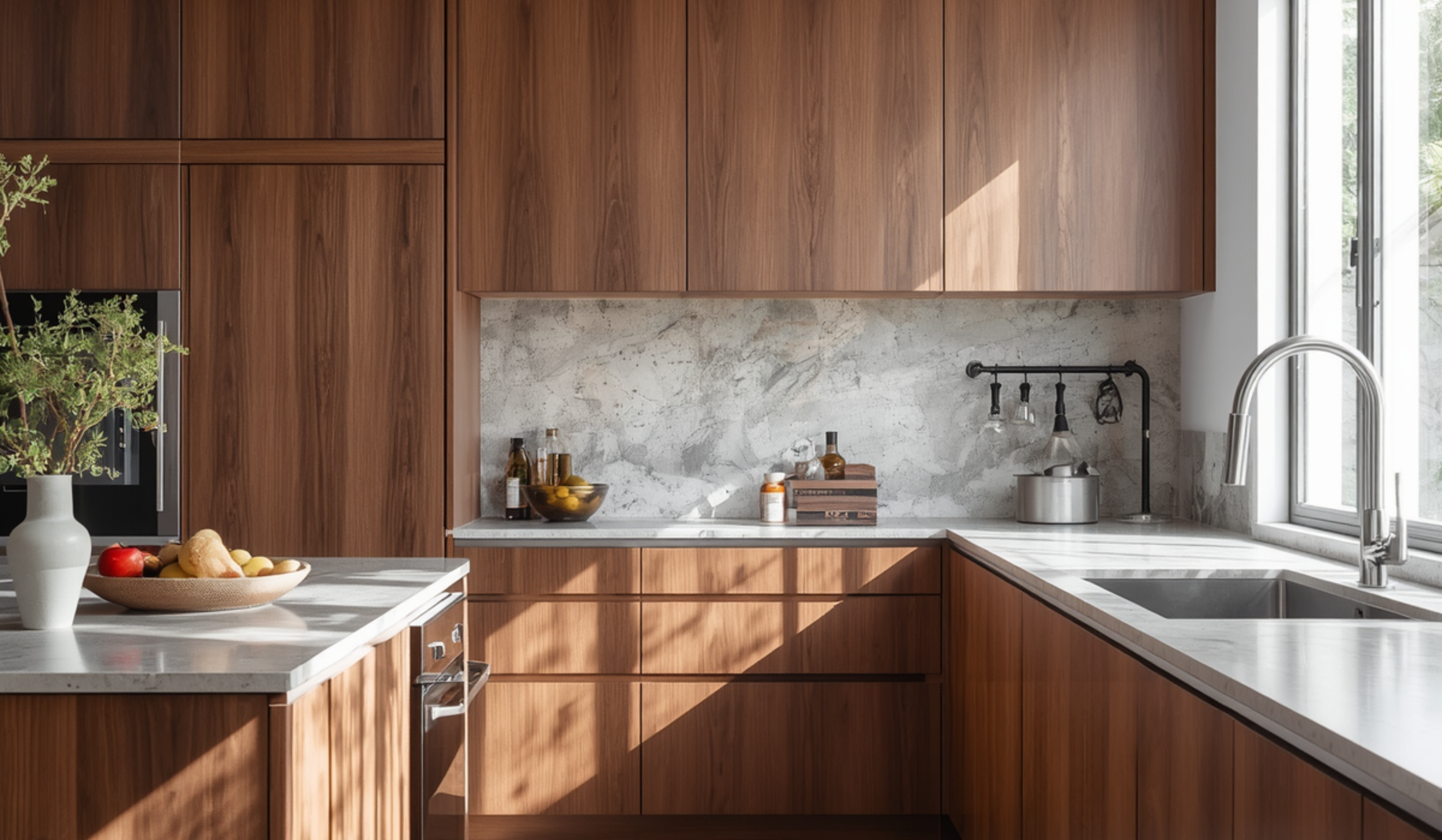
White oak cabinets are beautiful. They're warm, versatile, and work in modern and traditional kitchens alike. There's a reason they're everywhere right now.
But if you're planning a renovation and trying to figure out how to choose kitchen cabinets, there's a decent chance you're leaning toward white oak cabinets because it's what everyone else is choosing. And while there's nothing wrong with that, there are other wood species that bring just as much warmth and character, without making your kitchen look identical to every other renovation on your Instagram feed.
Here are four alternatives worth considering if you want something that feels a little more you.
Alternative #1: Walnut Kitchen Cabinets (For Drama and Sophistication)
What Walnut Kitchen Cabinets Look Like
Rich chocolate brown color. Beautiful dark grain that runs through the wood in elegant, linear patterns. Walnut kitchen cabinets have a depth and warmth that feels instantly sophisticated.
If white oak cabinets are the safe, versatile choice, walnut is the bold, confident one.
Why Walnut Kitchen Cabinets Work
Walnut brings drama. It creates contrast. It makes a statement without trying too hard. And in the right kitchen, walnut kitchen cabinets look absolutely stunning.
This is the wood choice for modern and contemporary kitchens where you want impact and elegance. It pairs beautifully with white or light countertops (marble, white quartz), brass or black hardware, and lighter walls that let the cabinets be the star.
What to Know Before Choosing Walnut Kitchen Cabinets
Walnut is softer than oak kitchen cabinets, which means it's more prone to dents and dings over time. It also darkens slightly as it ages, developing even richer tones. And it's typically at a premium price point compared to white oak cabinets.
But if you have the budget and the right space for it? Walnut is worth every penny.
When to Choose Walnut Over White Oak Cabinets
Choose walnut kitchen cabinets if:
You want a darker, more dramatic wood tone
Your kitchen has enough natural light to handle dark cabinetry (crucial)
You're drawn to modern, sophisticated aesthetics
You want cabinets that feel elevated and intentional
DESIGN TIP:
Walnut kitchen cabinets work best in kitchens with abundant natural light. In darker spaces, they can feel heavy. If you're planning a kitchen renovation on a budget, consider using walnut on a feature island and pairing it with lighter perimeter cabinets to get the look without the full cost.
Alternative #2: Oak Kitchen Cabinets in Hickory (For Rustic Character)
What Hickory Cabinets Look Like
Significant color variation. You'll see light cream tones and deep brown tones in the same board, creating a dynamic, organic look. Strong grain patterns. Lots of natural character.
Hickory is not subtle. And that's the point. 💁
Why Hickory Works When You're Figuring Out How to Choose Kitchen Cabinets
Hickory gives you a rustic, collected look that feels organic and lived-in. It's perfect for farmhouse, rustic, or mountain-style kitchens where imperfection is the aesthetic.
There are two versions of hickory to know about:
Standard hickory: Lots of color variation, bold character
Select hickory: More uniform color and grain (closer to the consistency of white oak cabinets)
What Hickory Pairs Well With
Natural stone countertops, warm metals (brass, bronze, copper), and earthy color palettes. Hickory loves natural materials and hates competing with anything too polished or modern.
What to Know Before Choosing Hickory
Hickory is very hard (more durable than oak kitchen cabinets), but the variation can feel busy if not styled carefully. This is not the wood for minimalist kitchens or spaces that prioritize clean lines over character.
When to Choose Hickory Over White Oak Cabinets
Choose hickory if:
You want a rustic aesthetic with lots of natural character
You're okay with significant color variation (and actually love it)
Your kitchen style leans farmhouse, mountain, or organic modern
You want wood that's incredibly durable
DESIGN TIP:
If you love the idea of hickory but worry about it feeling too busy, opt for select hickory. It gives you some variation without the full rustic impact, making it easier to style in a kitchen where you're mixing materials.
Alternative #3: Knotty Alder Cabinets (For Approachable Warmth)
What Knotty Alder Cabinets Look Like
Warm, reddish-brown tone with visible knots throughout. The knots are a feature, not a flaw. They add personality, texture, and a handcrafted quality that feels welcoming and lived-in.
Knotty alder is the wood that says, "Come in, sit down, this kitchen is for living in, not just looking at."
Why Knotty Alder Feels Different When Learning How to Choose Kitchen Cabinets
The knots make it feel approachable. Less formal. Not too fancy or too precious. It's the kind of wood that works in casual, collected kitchens, mountain homes, and spaces that prioritize warmth over perfection.
If white oak cabinets are the polished choice and walnut kitchen cabinets are the sophisticated choice, knotty alder is the friendly, down-to-earth choice.
What Knotty Alder Pairs Well With
Warm countertops (butcher block, warm marble, cream quartz), bronze or black hardware, and natural materials like stone or brick. Knotty alder loves texture and hates sterile, overly modern spaces.
What to Know Before Choosing Knotty Alder
Knotty alder is softer than oak kitchen cabinets, which means it dents more easily. The knots can be filled for a smoother look or left natural for maximum character. And it's typically more affordable than walnut kitchen cabinets or cherry, making it a smart choice for a kitchen renovation on a budget.
When to Choose Knotty Alder Over White Oak Cabinets
Choose knotty alder if:
You want wood that feels approachable and collected
You love visible knots and natural imperfections
Your kitchen style is casual, rustic, or mountain-inspired
You want warmth without the formality of cherry or walnut
Alternative #4: Cherry Cabinets (For Wood That Develops Character Over Time)
What Cherry Cabinets Look Like
Warm, reddish-brown with rosy undertones when first installed. Smooth, fine grain. Beautiful natural luster.
But here's what makes cherry special: it changes dramatically over time.
The Patina Factor in How to Choose Kitchen Cabinets
Cherry darkens and deepens significantly as it ages. What starts as a light amber color can develop into rich mahogany tones over 5-10 years. This isn't a flaw. It's part of cherry's charm and character.
If you love the idea of your kitchen cabinets evolving and developing a patina, cherry is your wood.
Why You Shouldn't Be Scared of the Rosy Undertones
The rosy undertones in cherry are beautiful. They add warmth. And as the wood ages and deepens, those tones become richer and more sophisticated.
Cherry works beautifully in traditional and transitional kitchens that want warmth and elegance. It pairs with warm countertops (marble with gold veining, warm quartz), brass hardware, and cream or warm white walls.
What to Know Before Choosing Cherry
Cherry changes color dramatically. You need to embrace the evolution, not fight it. If you want your cabinets to look exactly the same in 10 years as they do on install day, cherry isn't for you.
But if you love the idea of your kitchen developing character and richness over time? Cherry is stunning. 🙌
When to Choose Cherry Over White Oak Cabinets
Choose cherry if:
You love the idea of your cabinets developing character over time
You're drawn to warm, rosy wood tones
Your kitchen style leans traditional or transitional
You want wood that feels timeless and elegant
DESIGN TIP:
Cherry works best when you commit to warm tones throughout the space. If you're mixing cool grays with cherry cabinets, the rosy undertones will clash. Stick with warm whites, creams, and gold-toned materials for a cohesive look, especially important when planning a kitchen renovation on a budget.
📖 RELATED: Want more details on how different woods perform and how stain shows up on each species? Read Good Wood for Cabinets: What to Know Before You Decide.
How to Choose Between White Oak Cabinets and These Wood Alternatives
Here's a quick decision framework for how to choose kitchen cabinets based on wood species:
Want drama and sophistication? → Walnut kitchen cabinets
Want rustic character? → Hickory
Want approachable warmth? → Knotty Alder
Want wood that develops patina? → Cherry
Want something safer and more neutral? → White oak cabinets (still a great choice)
Remember: wood choice affects the entire vibe of your kitchen. Choose based on your style, your tolerance for variation and change, and how you want your kitchen to feel.
📖 RELATED: Once you've decided between white oak cabinets, walnut kitchen cabinets, or another wood species, the next step is making sure you're asking the right questions about construction and quality. Read Kitchen Cabinet Renovation: 5 Must-Ask Questions for Your Cabinet Maker to learn what to ask about framing, box materials, and finishes before you finalize anything.
Wrapping It Up: White Oak Cabinets Are Great, But They're Not Your Only Option
Look, white oak cabinets aren't going anywhere. They're beautiful, they're versatile, and if you genuinely love them, you should absolutely choose them.
But if you're picking white oak cabinets because you think you're supposed to, or because you don't know what else exists, pause for a second.
Walnut kitchen cabinets bring drama. Hickory brings character. Knotty alder brings warmth. Cherry brings evolution.
All of them are stunning in the right kitchen. And all of them will make your space feel a little less "I saw this exact kitchen on Pinterest 400 times" and a little more "this is mine."
So maybe visit a wood supplier, look at actual samples, and see if one of these alternatives speaks to you when you're figuring out how to choose kitchen cabinets.
Your Next Step: Get the Cabinet Details Right From the Start
Let me save you from the classic "why didn't anyone tell me?" moment. You pick beautiful cabinets. You're so excited. Then they're installed and suddenly drawers don't open fully, corners are wasted, and your "timeless" finish already feels dated. It's not that you made bad choices… it's that you didn't know what to look for.
This guide walks you through:
7 cabinet mistakes I see (and fix) in client projects constantly
The details that matter most for layout, finishes, and function
How to catch problems while they're still easy to solve
Grab my FREE guide here→ Kitchen Renovation on a Budget: Top 7 Mistakes to Avoid When Choosing Kitchen Cabinets
It's free. It's quick. It might save your remodel. 🙌

Meet Taylor Ferrell: Interior Design, San Luis Obispo
I’m Taylor, the designer behind Salt Kitchen & Bath. I specialize in creating spaces that feel warm, collected, and uniquely yours. Have a design conundrum? Need to borrow my eyeballs? Hop on a 30-minute Zoom and pick my brain!